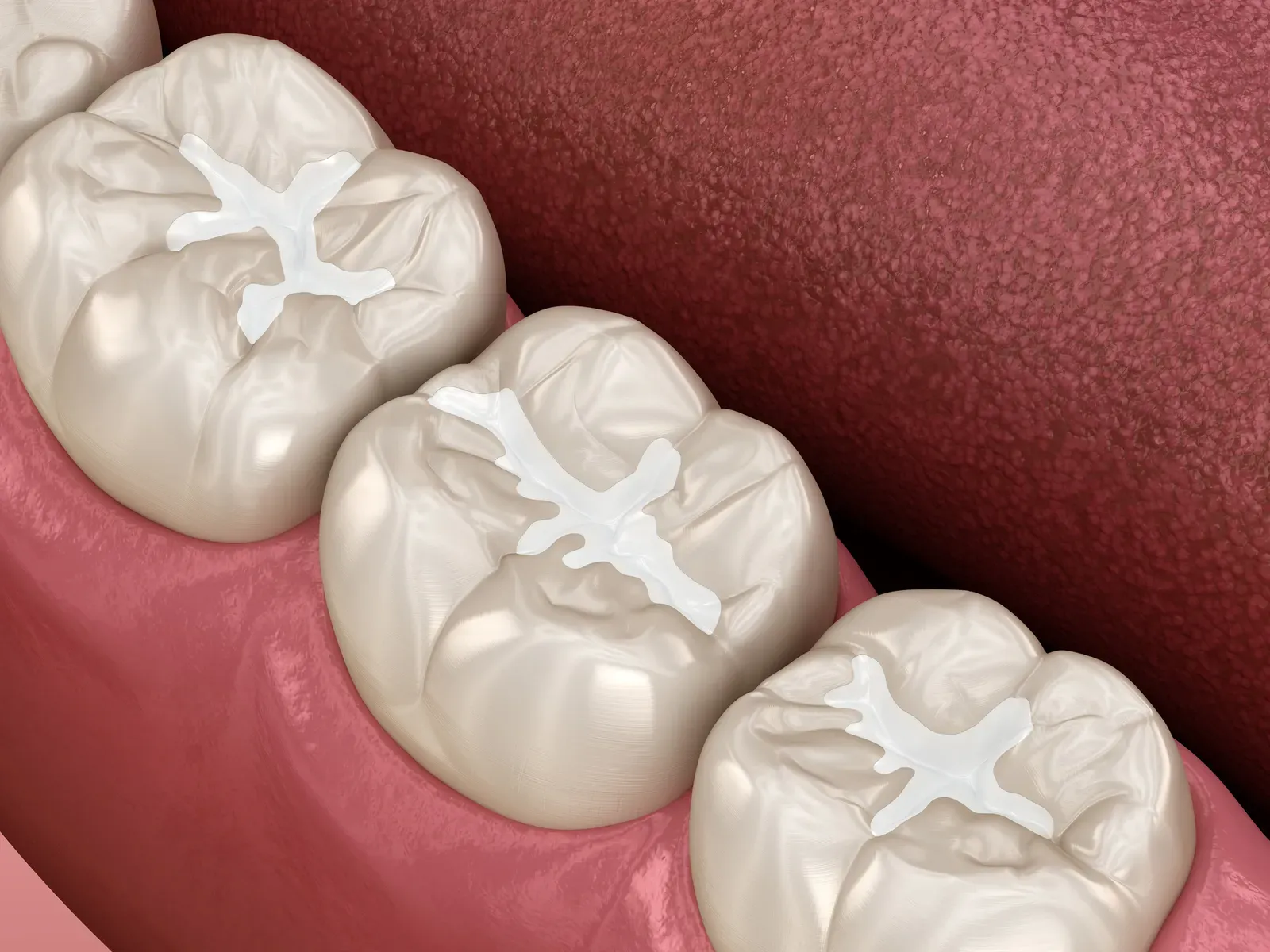
Most cavities do not start on the smooth, easy-to-reach surfaces of a tooth. They start in the deep grooves and pits of molars, where a toothbrush bristle simply cannot reach. These tiny canyons trap food particles and bacteria, and over months or years, that trapped debris turns into decay. It is one of the most common and most preventable patterns we see in patients of every age, especially kids who are still learning how to brush thoroughly.
Dental sealants are one of the simplest, least invasive tools we have to interrupt that pattern before it starts. They are not a trend or an upsell - they have been used in dentistry for decades and are backed by extensive research showing real reductions in cavity rates among treated teeth. Yet many patients still do not fully understand what sealants are, how they work, or whether they might benefit from them.
This article walks through exactly what dental sealants do, who tends to benefit most, how the procedure actually feels, and how they fit into a broader plan for long-term oral health. Whether you are weighing this option for your child or wondering if it still makes sense for your own back teeth, you will find a clear, practical explanation below.
What Dental Sealants Are and How They Work
A dental sealant is a thin, protective coating made of resin material that we apply directly to the chewing surfaces of back teeth - typically the molars and premolars. These are the teeth with the deepest, most irregular grooves, often called pits and fissures. Once the sealant is painted on and hardened with a curing light, it forms a smooth, solid barrier that physically blocks food particles, plaque, and bacteria from settling into those grooves.
Think of it less like a filling and more like a coat of varnish on wood. It does not change the structure of the tooth underneath; it simply seals off a vulnerable area that is naturally hard to clean with regular brushing. Because the material bonds directly to the enamel, it stays in place through normal chewing and daily brushing, and it is virtually undetectable when you smile or talk.
The science behind sealants is well established. Studies tracking sealed versus unsealed molars consistently show significantly lower rates of decay in the sealed teeth over multi-year periods. That is a meaningful statistic when you consider that molars, with their deep grooves, are where the vast majority of childhood and adolescent cavities actually form.
Who Benefits Most From Sealants
Sealants are most commonly recommended for children and teenagers, usually applied soon after the permanent first and second molars come in - around ages 6 and 12, respectively. This timing matters because newly erupted enamel is still maturing and slightly more vulnerable to acid attack, and getting a sealant on quickly gives decay less of a window to take hold.
That said, sealants are not exclusively a pediatric treatment. Adults with deep grooves in their molars, a history of frequent cavities, or dry mouth from medication can also benefit from sealants on teeth that have never been filled. We evaluate each patient's tooth anatomy and cavity history individually rather than applying a blanket rule based on age alone.
- Children with newly erupted molars: The first few years after a permanent molar comes in are the highest-risk window for decay in those deep grooves.
- Patients with deep pits and fissures: Some people simply have more pronounced grooves in their back teeth, which trap more debris no matter how carefully they brush.
- Anyone with reduced saliva flow: Saliva naturally helps rinse away bacteria and buffer acid, so patients with dry mouth face higher decay risk on all surfaces, including molars.
- Patients with a history of cavities: If you or your child has needed several fillings, sealing the remaining unfilled molars is a reasonable way to get ahead of the next one.
What Happens During a Sealant Appointment
One of the most reassuring things about sealants is how quick and comfortable the appointment is. There is no drilling, no anesthesia, and no discomfort involved. We start by cleaning and drying the tooth thoroughly, since the sealant needs a clean surface to bond to properly. A mild conditioning gel is then applied briefly to help the material adhere, followed by a rinse and another drying step.
Next, we paint the liquid resin directly into the grooves of the tooth. It flows into every crevice, which is exactly the point - those are the spots a toothbrush cannot fully reach. A curing light hardens the material in a matter of seconds, and the sealant is immediately functional. Most patients can eat and drink normally right after leaving the chair, with no numbness or recovery period at all.
We typically combine sealant placement with a routine checkup, so it adds very little extra time to an appointment that is already on the calendar. If you are already scheduled for dental cleanings and exams, sealants can often be applied during that same visit for children or adults who are good candidates.
How Long Sealants Last and What Affects Durability
Dental sealants are durable, but they are not permanent. With normal wear from chewing, most sealants hold up well for several years, and many last five years or longer before needing a touch-up. We check them at every routine visit, looking for chips, wear spots, or areas where the material has thinned, and we can reapply or repair a sealant easily if needed.
A few habits can shorten a sealant's lifespan. Chewing ice, biting fingernails, or grinding the teeth at night puts extra mechanical stress on the material and can cause it to crack or wear down faster than expected. Patients who grind their teeth at night may also want to ask us about options related to TMJ disorders management, since nighttime clenching affects more than just sealants.
The good news is that monitoring sealant condition is simple and does not require a separate appointment. It is part of what we look at during every routine exam, so there is no extra burden on your schedule - just a quick visual and tactile check to confirm the barrier is still intact and doing its job.
Sealants Compared to Fillings and Other Preventive Steps
It helps to understand where sealants fit relative to other treatments. A filling repairs a tooth after decay has already damaged the enamel, removing the compromised tissue and replacing it with a restorative material. A sealant, by contrast, is applied to a healthy tooth to prevent decay from forming in the first place. One treats a problem; the other avoids one. If decay has already started, a sealant cannot reverse it, and a filling or one of our tooth-colored fillings would be the appropriate next step instead.
Sealants also work alongside, not instead of, other preventive measures like fluoride treatments and good brushing habits. Fluoride strengthens enamel across the whole tooth surface, while sealants specifically target the grooves that fluoride and brushing have the hardest time protecting. Used together, these approaches cover more ground than either one alone, which is why we often recommend both as part of a complete preventive plan.
For patients weighing the cost of prevention against the cost of treatment, the math tends to favor sealants. A sealant appointment is quick, comfortable, and considerably less expensive than treating a cavity that has progressed to needing a filling or, in more advanced cases, root canal treatment. Preventing the problem is almost always simpler than fixing it after the fact.
Key Takeaways
- • Sealants form a thin protective barrier over the deep grooves of molars, where most cavities actually start.
- • The application process is painless, quick, and requires no drilling or anesthesia.
- • Children benefit most right after permanent molars erupt, but adults with deep grooves or dry mouth can benefit too.
- • Sealants typically last several years and are checked and maintained at routine exams.
- • Sealants prevent decay rather than treat it, making them a lower-cost complement to fluoride and good brushing habits.
Frequently Asked Questions
Does getting a sealant hurt?
No. The process involves no drilling, no injections, and no numbing. Patients simply sit back while we clean, prep, and paint the sealant onto the tooth, then harden it with a curing light. Most people describe it as quick and completely painless.
Can sealants be placed on baby teeth?
Yes, in some cases. If a child's baby molars have especially deep grooves and a higher cavity risk, sealing them can help protect the tooth until it naturally falls out, which also helps preserve space for permanent teeth to come in properly.
Will a sealant hide a cavity that's already forming?
We always examine the tooth carefully, sometimes with X-rays, before placing a sealant to confirm the tooth is healthy. Sealants are meant for prevention, not for covering up existing decay, so we will recommend a filling first if any decay is already present.
Are dental sealants covered by insurance?
Many dental insurance plans cover sealants, particularly for children, as a preventive benefit. Coverage details vary by plan, so our team can help verify your benefits ahead of your visit. We also discuss options through our financial resources page for patients without insurance.
How do I know if I or my child needs sealants?
The best way to know is a routine exam, where we look closely at the grooves of the back teeth, review cavity history, and discuss daily habits like diet and brushing technique. From there, we can tell you plainly whether sealants make sense for your situation.
A Small Step That Prevents a Bigger Problem
Dental sealants are one of the few treatments in dentistry where a few minutes of simple, painless care can meaningfully lower the odds of a much bigger problem down the road. They do not replace brushing, flossing, or regular checkups, but they close a gap that those habits alone cannot always cover - the deep, hard-to-reach grooves where cavities so often begin.
Whether you are thinking about sealants for a child whose adult molars just came in, or wondering if your own back teeth could use the extra protection, it is worth bringing up at your next visit. A quick look at your tooth anatomy and cavity history will tell us whether sealants are a smart addition to your preventive care plan.