About
Services
Emergency Dentistry
Same-day care for pain, swelling, breaks and knocked-out teeth — including a $29* emergency exam.

Dental sealants are thin, protective coatings applied to the chewing surfaces of your molars and premolars - the teeth that do the hardest work and collect the most food debris and bacteria. At Flossophy Dental Studio, we offer this simple, affordable preventive treatment as part of our broader general dentistry program, designed to stop cavities before they ever have a chance to start. If you have searched for an emergency dentist in Fort Worth after a toothache turned out to be an untreated cavity, sealants are exactly the kind of proactive care that helps families avoid that painful scenario altogether.
Dental sealants are thin, protective coatings applied to the chewing surfaces of your molars and premolars - the teeth that do the hardest work and collect the most food debris and bacteria. At Flossophy Dental Studio, we offer this simple, affordable preventive treatment as part of our broader general dentistry program, designed to stop cavities before they ever have a chance to start. If you have searched for an emergency dentist in Fort Worth after a toothache turned out to be an untreated cavity, sealants are exactly the kind of proactive care that helps families avoid that painful scenario altogether.
The back teeth have deep grooves and pits, called fissures, that are nearly impossible to clean completely with a toothbrush alone. Bacteria and food particles settle into these crevices and, over time, break down enamel from the inside out. A sealant fills those grooves with a smooth, durable barrier, closing off the hiding spots where decay typically begins. It is one of the most cost-effective, evidence-backed tools in modern family dentistry, and it takes only a few minutes per tooth with zero drilling, zero anesthesia, and zero discomfort.
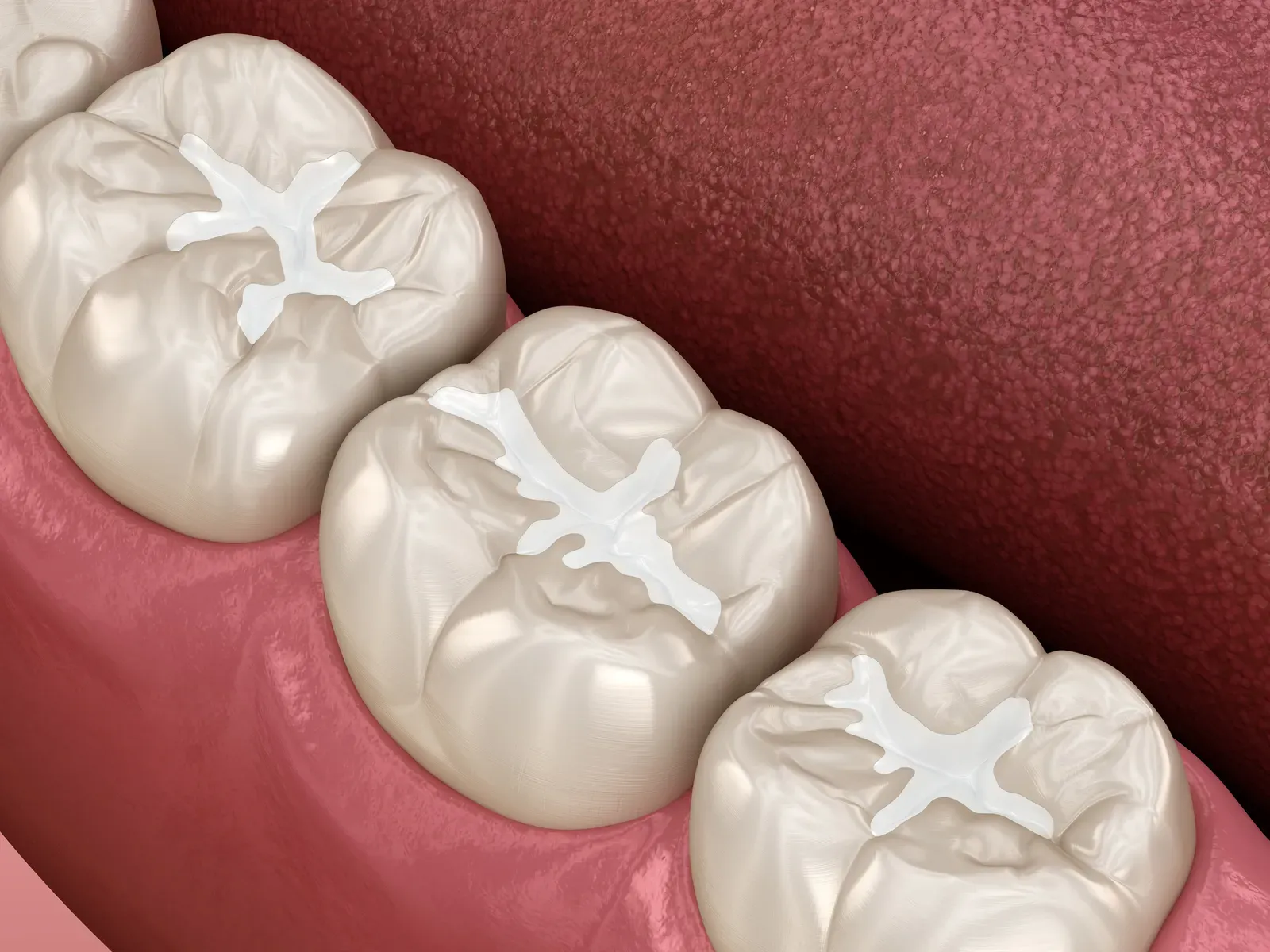
Most patients do not feel any pain or notice any symptoms when early tooth decay is forming in a deep groove - that is exactly what makes sealants so valuable as a preventive measure rather than a reactive one. During a routine exam, our hygienists and dentists look closely at the grooves of your molars to catch risk factors before they turn into a filling, a root canal, or worse, an emergency visit. Families across Fort Worth bring children in as soon as their first permanent molars erupt, but adults with deep fissures or a history of frequent cavities benefit from sealants just as much.
Recognizing when sealants make sense can save you money, time, and discomfort down the road. Below are the most common indicators we look for when recommending this treatment.
Dental sealants are frequently associated with children, and for good reason - kids are still learning proper brushing technique and their newly erupted molars have the deepest, least-worn grooves. But candidacy is not limited to any single age group. Our general dentistry team evaluates each patient individually, looking at tooth anatomy, cavity history, diet, and home-care habits before recommending sealants as part of a personalized preventive plan.
Many adults are surprised to learn they still qualify, especially if their molars were never sealed as children or if an old sealant has worn down over the years. We will walk you through exactly why we are recommending the treatment and what results you can expect.
Not every tooth or patient calls for the same sealant approach. Our dentists select the right material and technique based on the depth of your grooves, your age, your cavity risk, and how long you need the protection to last. We keep several options on hand so your treatment plan is tailored rather than one-size-fits-all, aligning with the same individualized philosophy we use throughout our general dentistry services.
Here is an overview of the materials and methods we may use depending on your specific needs:
The appeal of dental sealants goes well beyond convenience. This is one of the rare dental treatments where a small, quick investment today produces measurable savings and health protection for years into the future. Research consistently shows that sealed molars develop far fewer cavities than unsealed ones, which means fewer fillings, fewer root canals, and fewer emergency appointments for a cracked or infected tooth. For families balancing a household dental budget, that difference adds up quickly.
Beyond the financial upside, sealants support better long-term oral health in several concrete ways:
Dental sealants require no special recovery period - you can eat, drink, and go about your day immediately after your appointment. That said, a little ongoing attention helps your sealants last as long as possible, typically several years before a checkup might reveal the need for a touch-up or reapplication. We will check the condition of your sealants at every routine cleaning as part of your regular general dentistry visits.
Follow these simple guidelines to maximize the lifespan of your sealants and keep your smile protected between visits:
The entire process is quick, painless, and typically completed in a single visit. Most patients are in and out of the chair in well under an hour, even when multiple teeth are being sealed in the same appointment. Here is exactly what to expect.
We thoroughly clean the tooth surface to remove plaque and debris, then dry it completely so the sealant material can bond properly to the enamel.
A mild acidic gel is applied briefly to slightly roughen the tooth's surface, creating microscopic grooves that help the sealant adhere more securely.
We rinse away the etching gel and dry the tooth once more, ensuring a clean, moisture-free surface for the sealant resin to bond with.
The liquid sealant is carefully painted into the grooves and pits of the tooth, filling in every crevice where decay-causing bacteria would otherwise take hold.
A special curing light hardens the sealant in a matter of seconds, bonding it firmly to the tooth so it is ready for normal use immediately.
We confirm your bite feels natural and comfortable before you leave, making any minor adjustments needed so the sealed tooth feels completely normal when chewing.
Preventive care works best when it is part of an ongoing relationship with a dental team that knows your family's history, habits, and goals. At Flossophy Dental Studio Matthew, sealants are never treated as an isolated add-on - they are integrated into our broader general dentistry approach, alongside routine cleanings, exams, and fluoride care, so nothing falls through the cracks.
Patients across Fort Worth trust us because we combine clinical precision with a genuinely welcoming, low-pressure environment, especially important for families bringing children in for their very first dental treatments.
With proper care, dental sealants typically last between three and ten years before needing to be reapplied. We check their condition at every routine cleaning and will recommend a touch-up only if we notice wear, chipping, or a loss of coverage.
No. While sealants are most commonly applied to children's newly erupted molars, adults without existing fillings or decay can also benefit, especially if their natural grooves are deep or they have a history of frequent cavities.
Not at all. There is no drilling, numbing, or discomfort involved. The process is entirely painless and involves only cleaning the tooth, applying a mild etching solution, painting on the sealant material, and curing it with a light.
Yes. The sealant hardens immediately under the curing light, so you can eat and drink normally as soon as you leave our office. There is no downtime or waiting period required.
No. Sealants protect the chewing surfaces of back teeth, but you still need to brush twice daily and floss to protect the sides of your teeth and your gumline. Sealants are one layer of a complete preventive routine, not a replacement for it.
Many dental insurance plans cover sealants, particularly for children, as a preventive benefit. Our front desk team will verify your specific coverage and provide a clear estimate of any out-of-pocket cost before treatment begins.
Your Smile Starts Here
Schedule your visit with Flossophy Dental Studio Matthew and discover gentle, personalized care designed around your comfort and your smile.